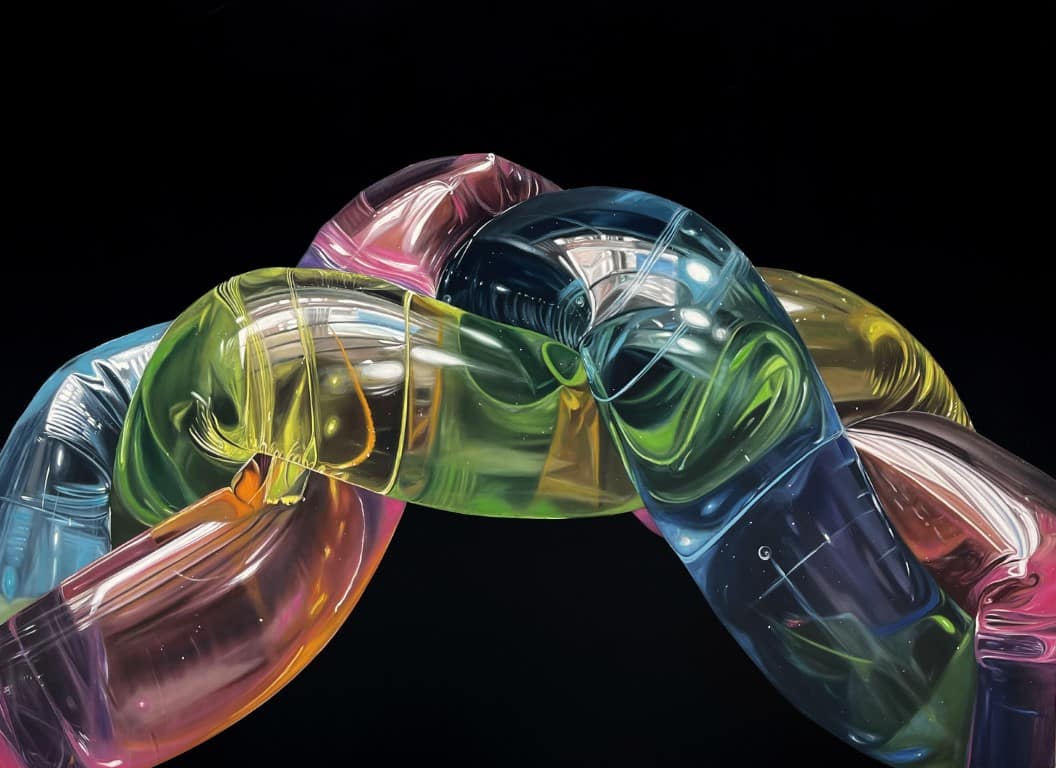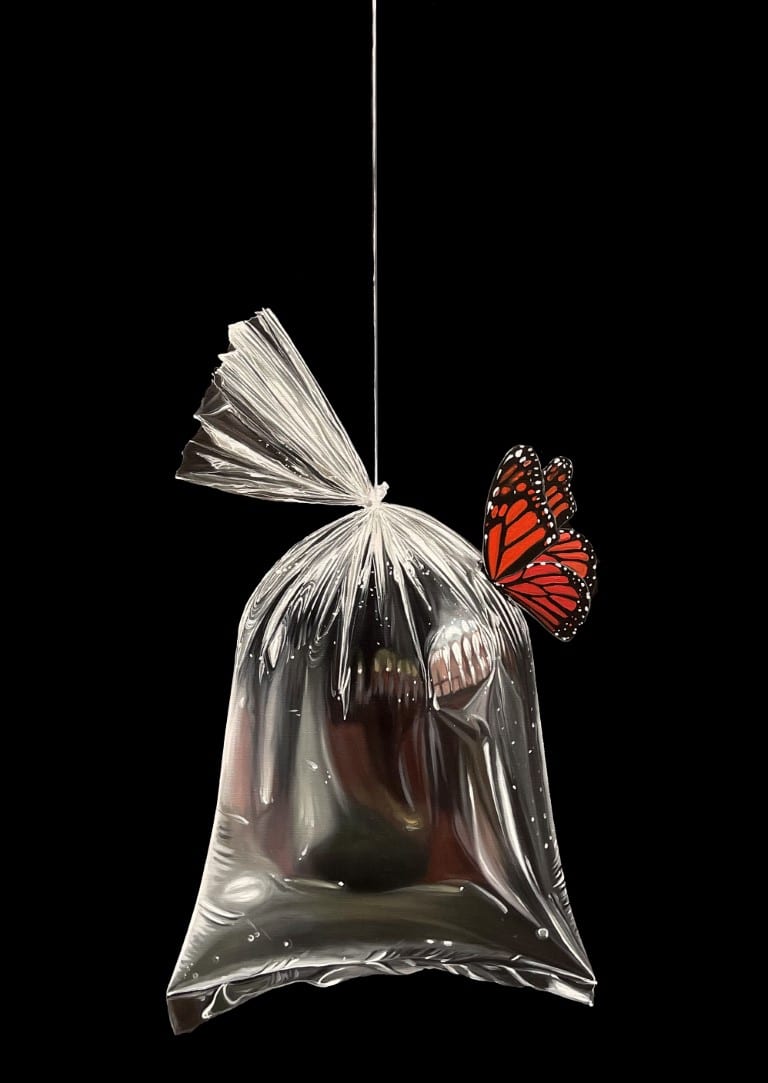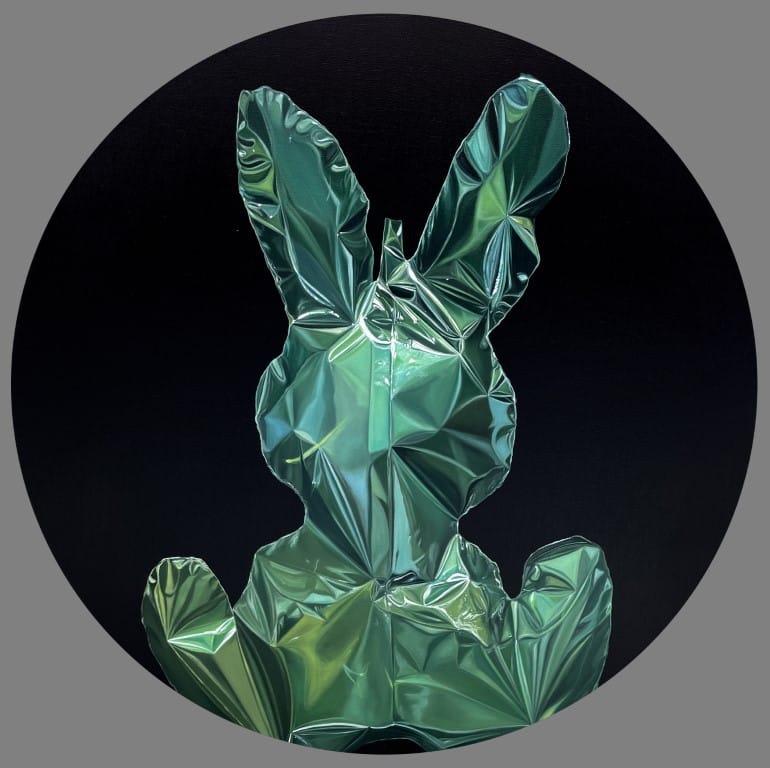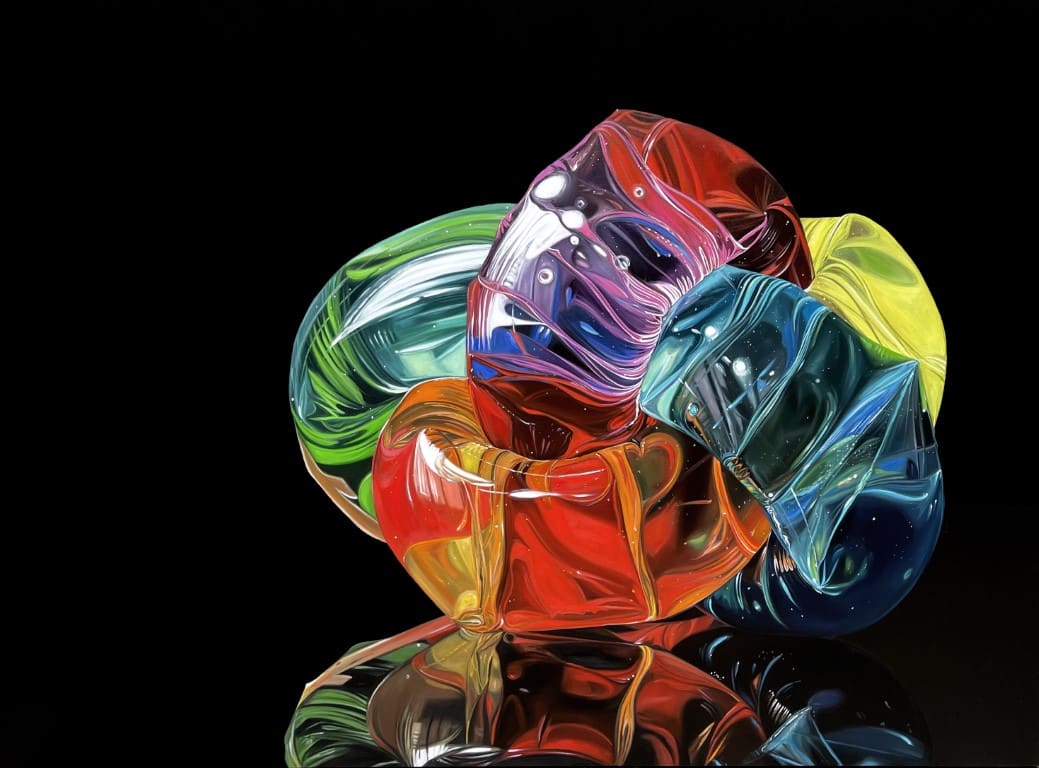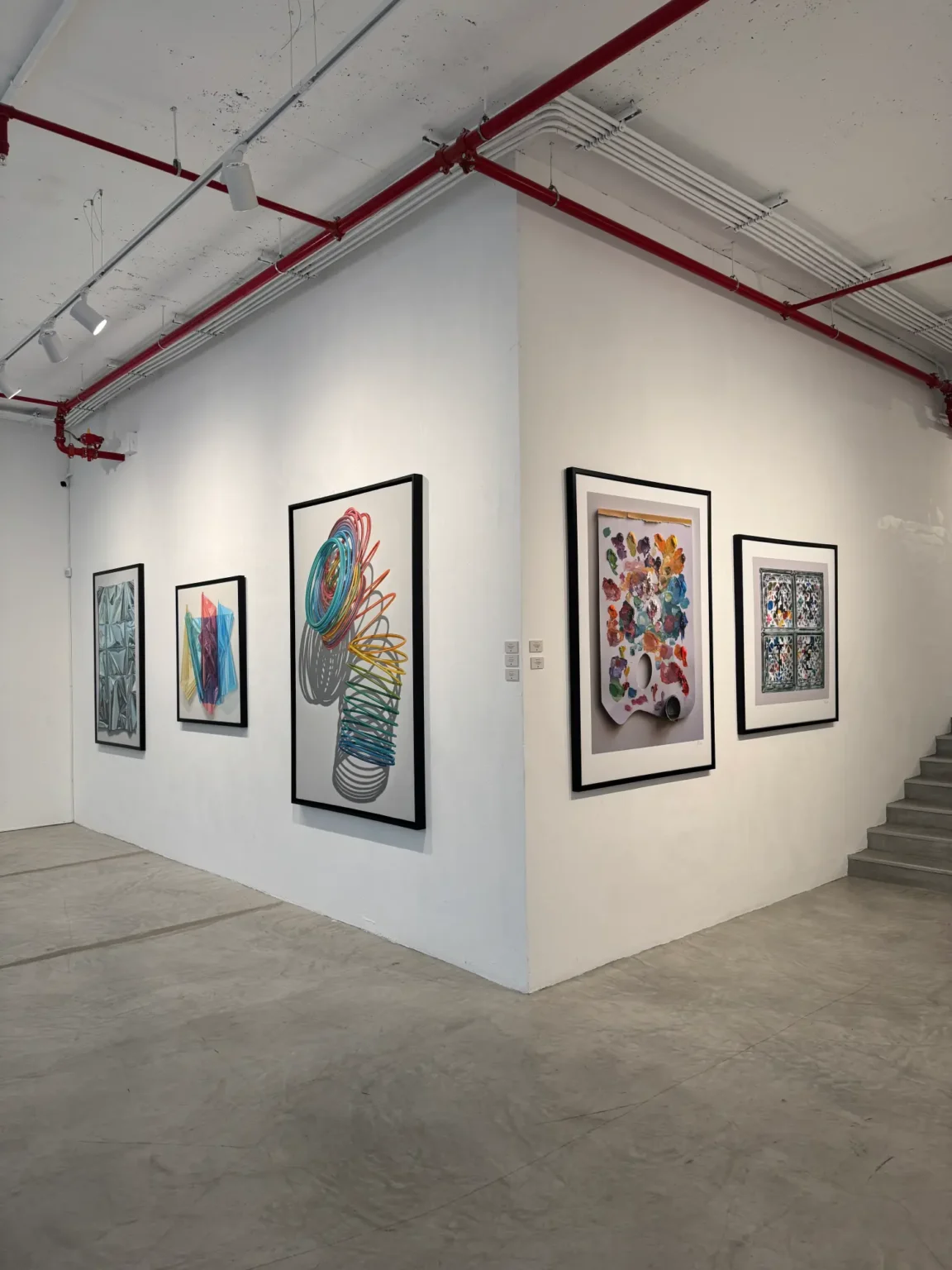


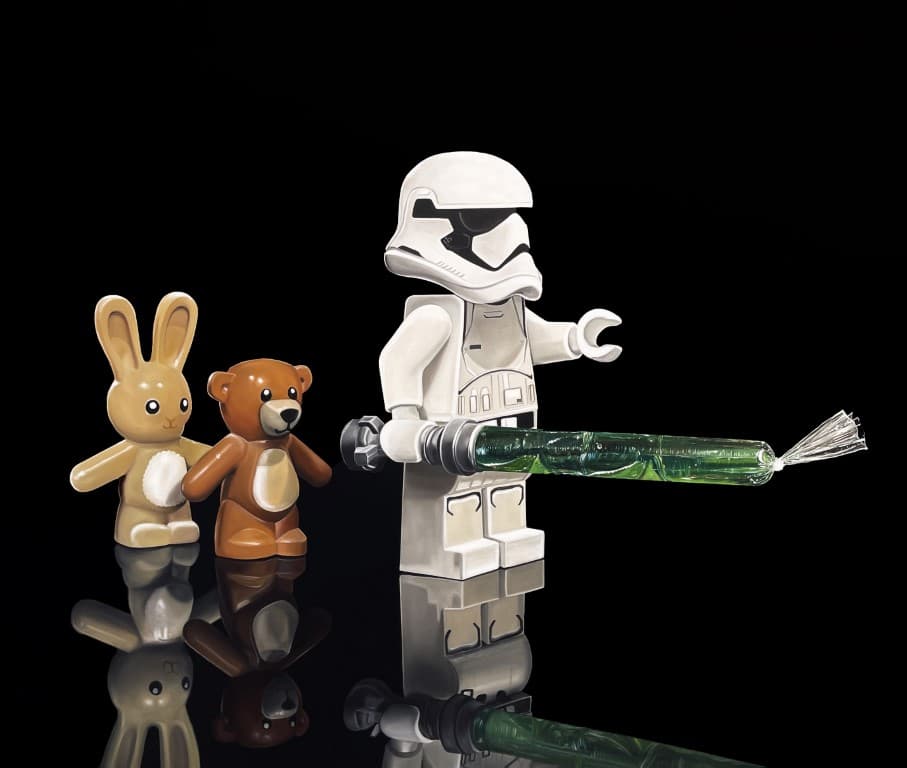
ADN (2022) arises from several formal explorations that Villabon has been working on: light, darkness, color, and the very materiality of the bags. It also comes from the photographic analysis of films and universal literature, cited in different pieces. The artist’s sensitivity to certain popular images is evident in exceptionally detailed paintings featuring miniature Lego figures of characters from Star Wars, Mickey Mouse, and Alice in Wonderland—common references that bring to mind the Pop aspect of the works. However, Villabón’s reflections go beyond the play of these everyday pictorial representations, as they allude to plastic as a silent weapon that affects the environment, and therefore, our lives.
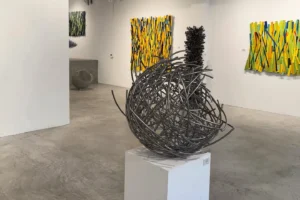
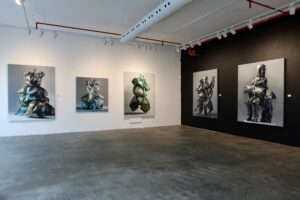
For their part, sculptures accompanied by an audiovisual piece are, in a way, the artist’s interpretation of different objects. At first glance, the sizes of the artworks are striking because they distance themselves from a “real” apprehension of a bear, a balloon, and even the plastic bag itself. Which leads us to wonder, what is inside these sculptures? The air that fills the interior space of balloons is like a memory: we cannot see it, but it is there.
Flavored ice bags, consumed in various parts of the region as sweets or simply to cope with the heat, are another peculiarity of the environment that Villabón has investigated. The Bolis, similar to suspended water bags, showcase the artist’s mastery in handling vibrant colors, glows, and nuances. Reflections also express physical phenomena such as the reflection and refraction of light that strikes objects. Furthermore, when these intertwine, simulating the two strands of DNA, they poetically construct parallels such as: human beings and their contexts, childhood and adulthood, light and darkness, color and shadow, the conscious and the unconscious, among others.
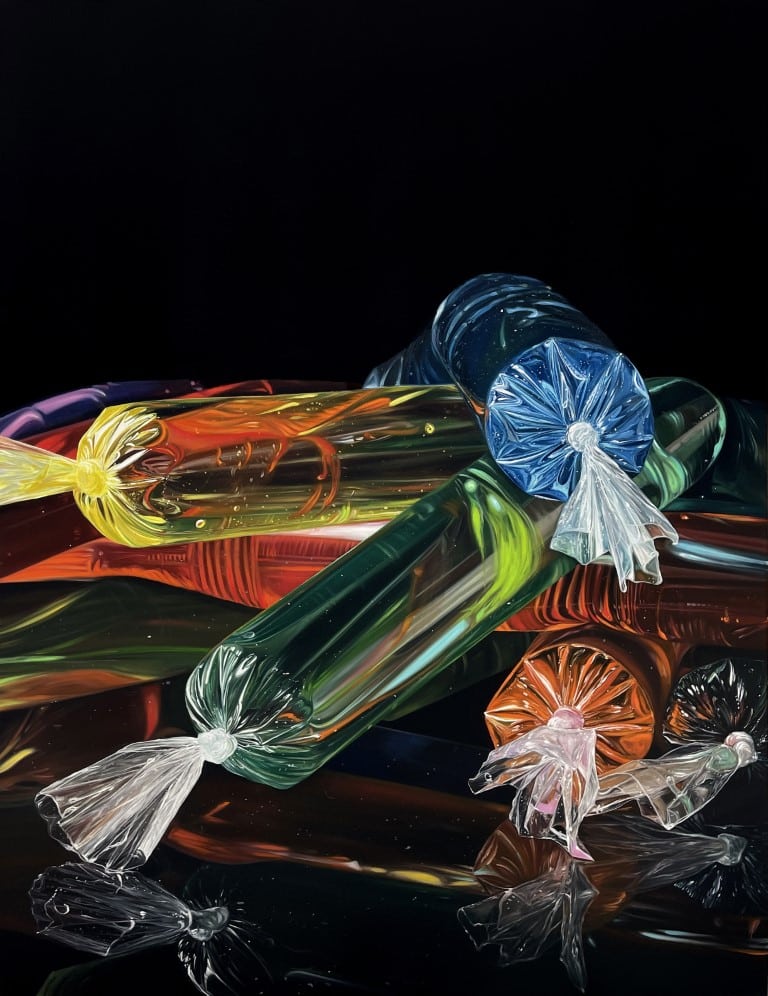
The exhibition invites viewers to reflect on the metaphors and analogies that the artworks evoke when referring to each person’s childhood experiences, without neglecting the importance of understanding based on perception. Not for nothing did Nietzsche affirm (…) the insect or the bird perceive a world completely different from that of man and that the question of which of the two perceptions of the world is correct is totally meaningless. In other words, Villabon is not concerned with the fly’s perception when it is frightened by the suspended bag, nor with the veracity of this habit, but rather points to an exercise in introspection about our past and imagination.