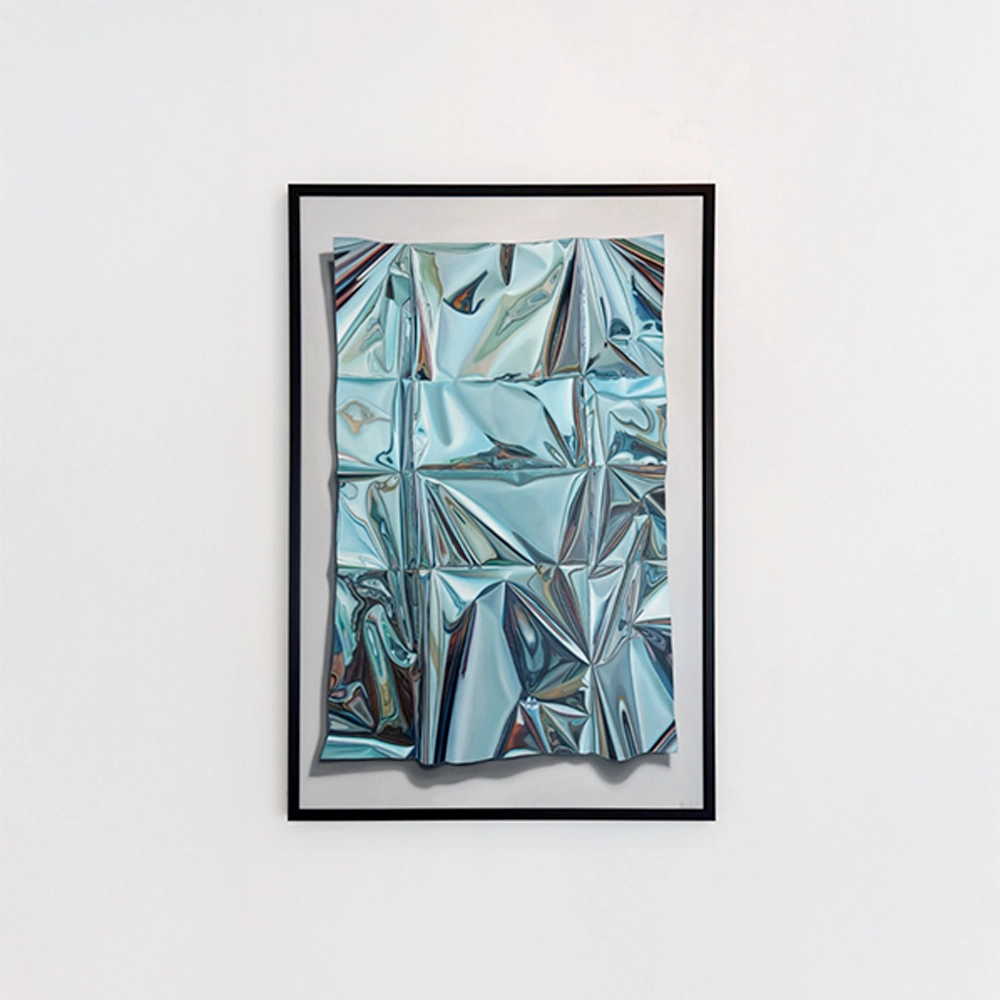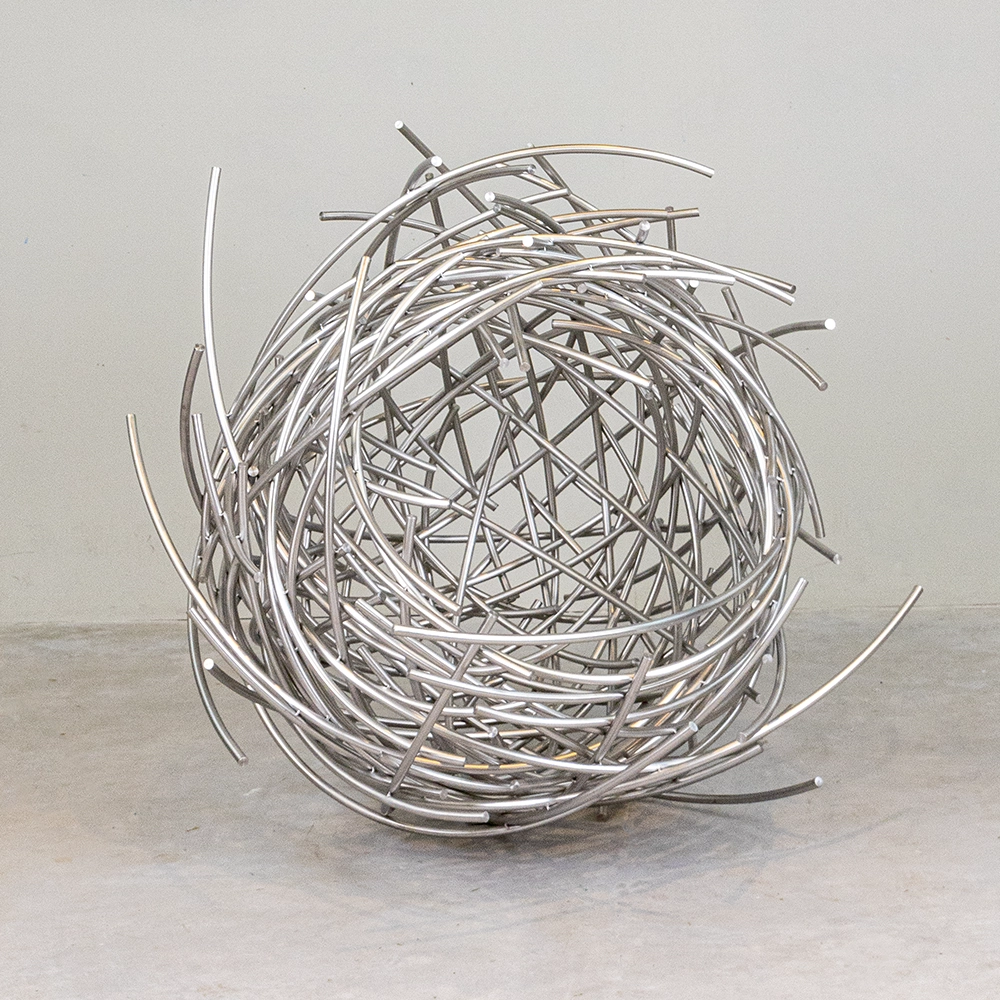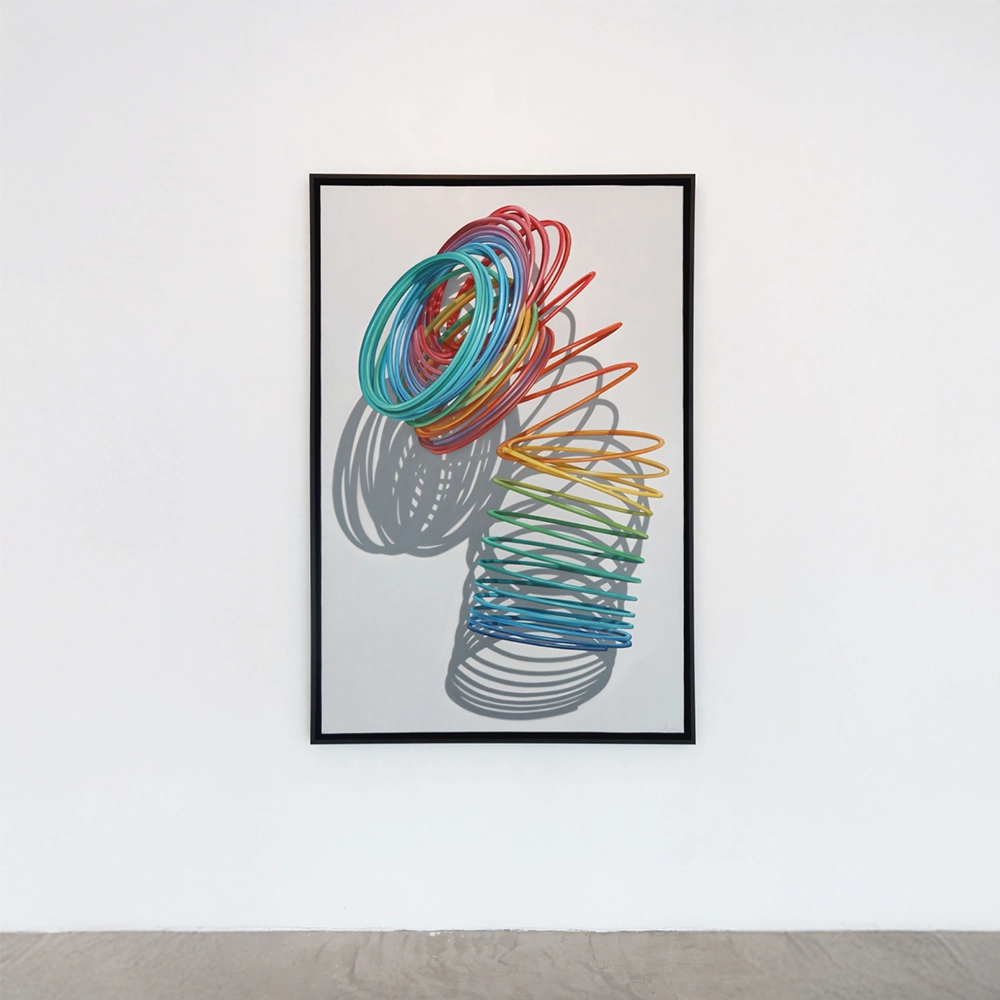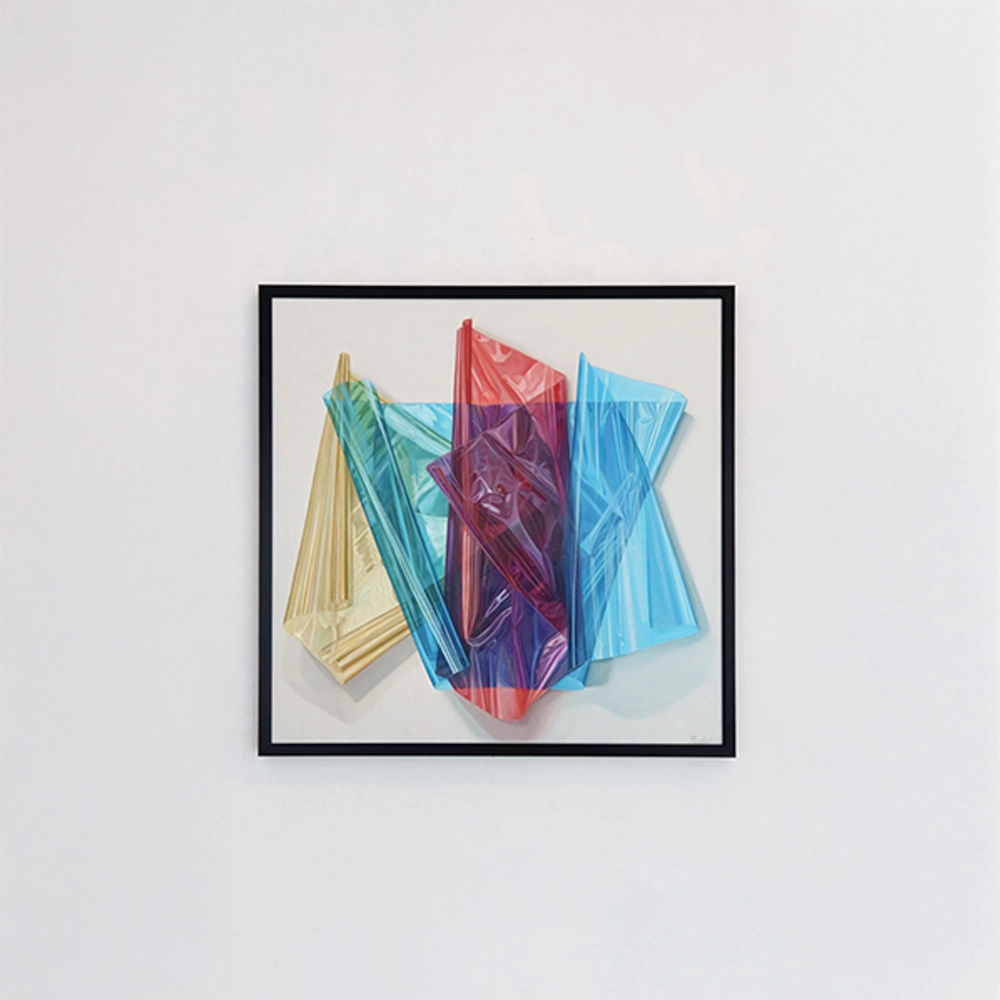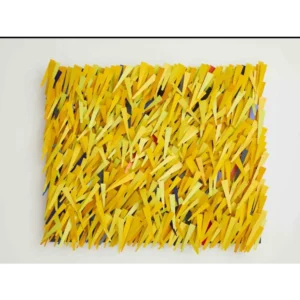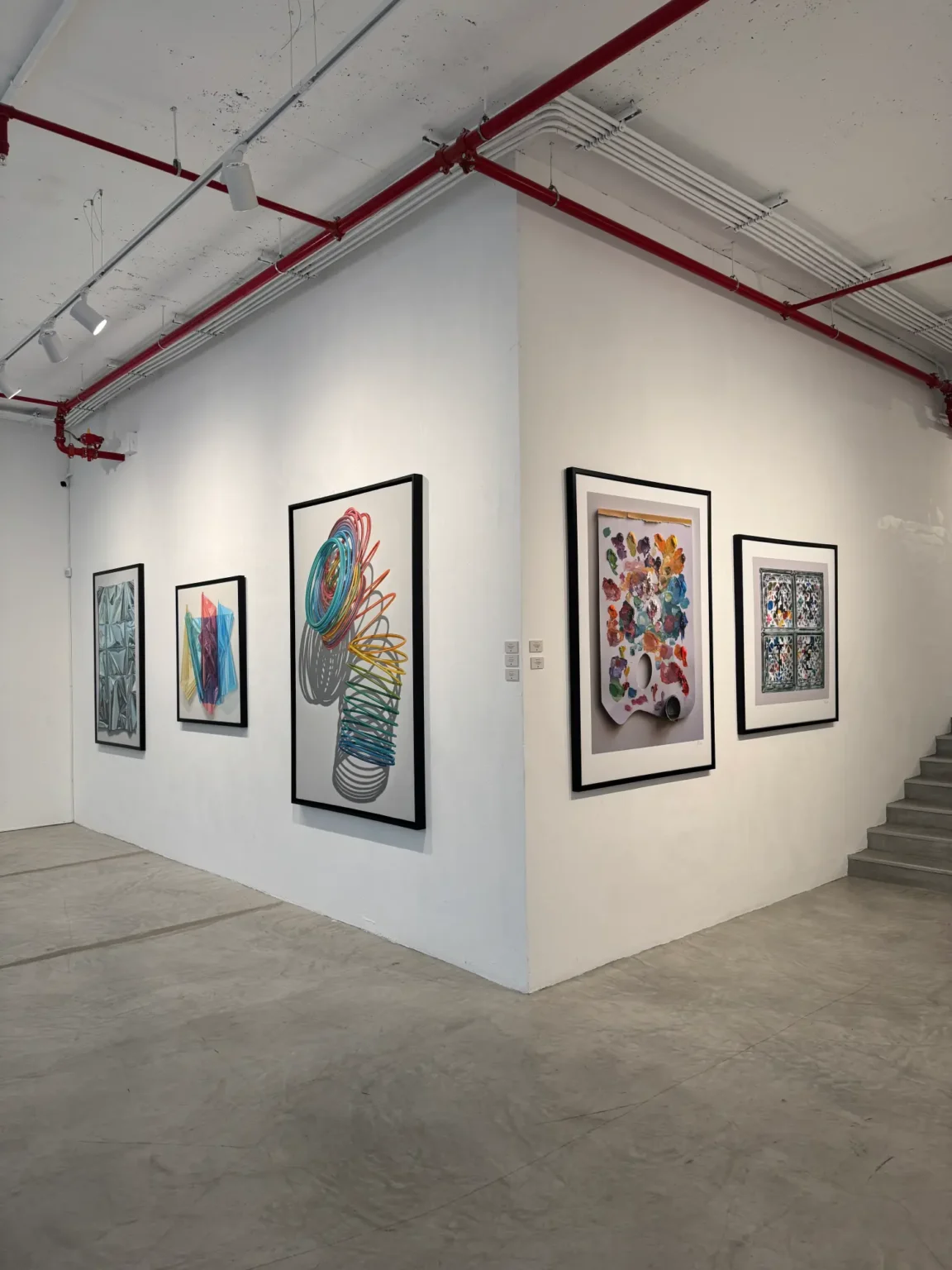


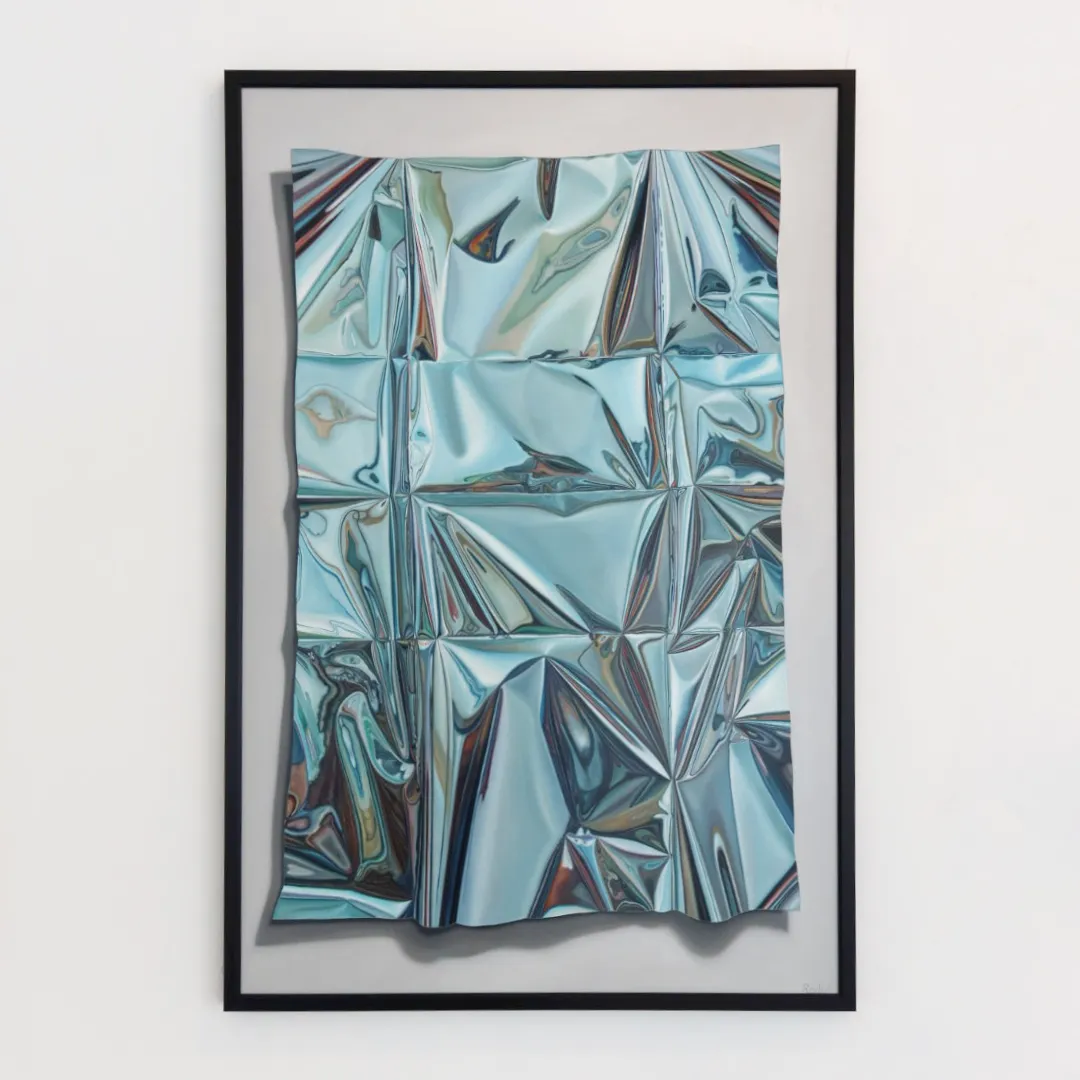
His paintings, made in oil on canvas, invite us to look in another way. Radic explores with materials such as aluminum, cellophane, balloons, and plastics. With his technique, he explores their shapes, folds, shadows, and reflections, giving them a new meaning. His series of aluminum works is especially known for showing how these simple materials can become pieces full of life and color.
From a young age, Radic felt a fascination with art, especially after a trip to Rome that changed his way of seeing the world. That experience led him to explore painting as an obsession that combines technique, passion, and a constant search for the extraordinary in the ordinary. His series of balloons, for example, is inspired by the spontaneity of Jackson Pollock, while his cellophanes, with their layers of color, evoke the emotional depth of Mark Rothko.
His works invite us to rediscover everyday objects from a new perspective, finding beauty where perhaps we had not seen it before. In his compositions, there are reflections, shadows, and textures that seem to come out of the canvas, bringing us closer to his vision of how the classic and the contemporary can coexist.
With his work, Nicolás Radic reminds us that art has the power to change our way of looking. Whether through a piece that plays with color and light or a composition that challenges our expectations, his work shows us that even in the simplest things we can find something extraordinary, and that true beauty lies in how we choose to look.
For nearly two decades, Nicolás Radić has focused his work on permanent tension, expanding the limits of the realistic motif in the search for contemporary art. All of his objects are decontextualized from their everyday functions in order to endow them with pictorial purpose. To endow them with art. The moment in which the environment is deformed and abstracted; allowing us another way of seeing reality, one in which colors and rhythms are highlighted over figurative definition. These painted objects are not seen in everyday life. Hyperrealism, then, moves away from reality in favor of approaching the imaginary of things.