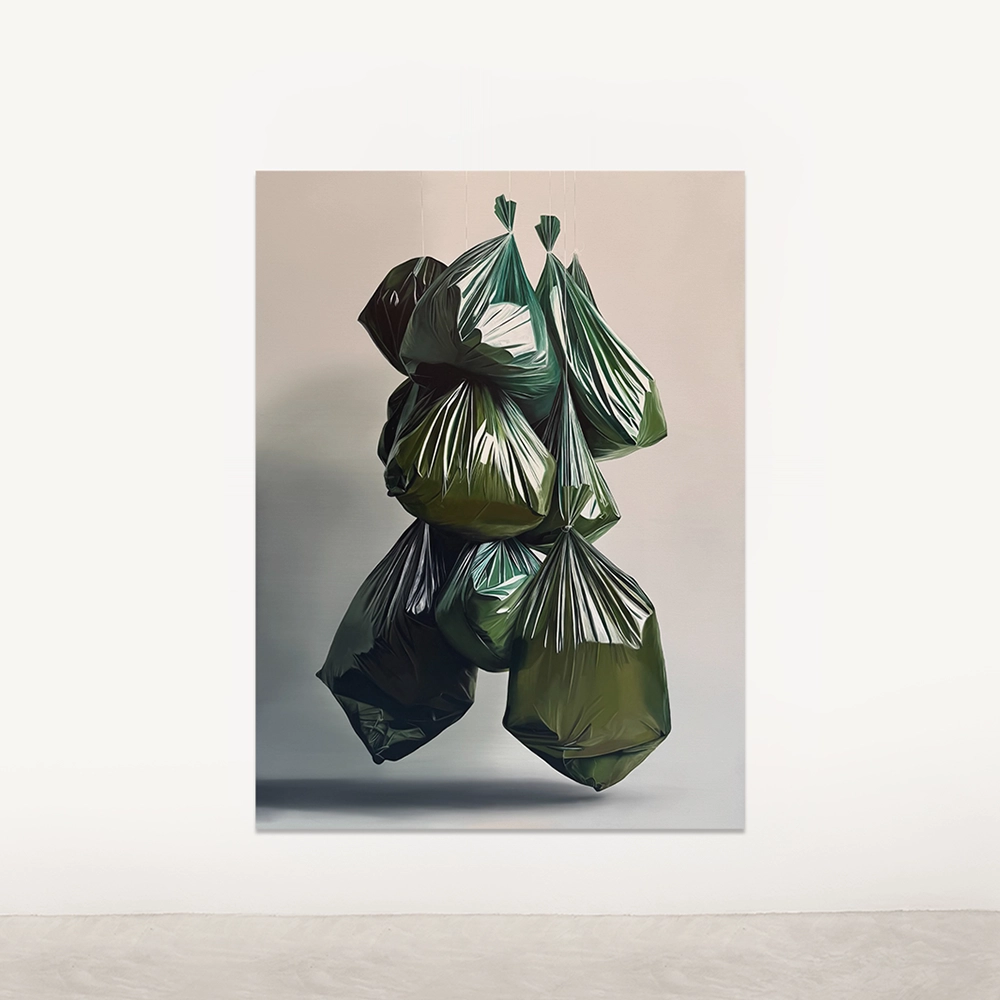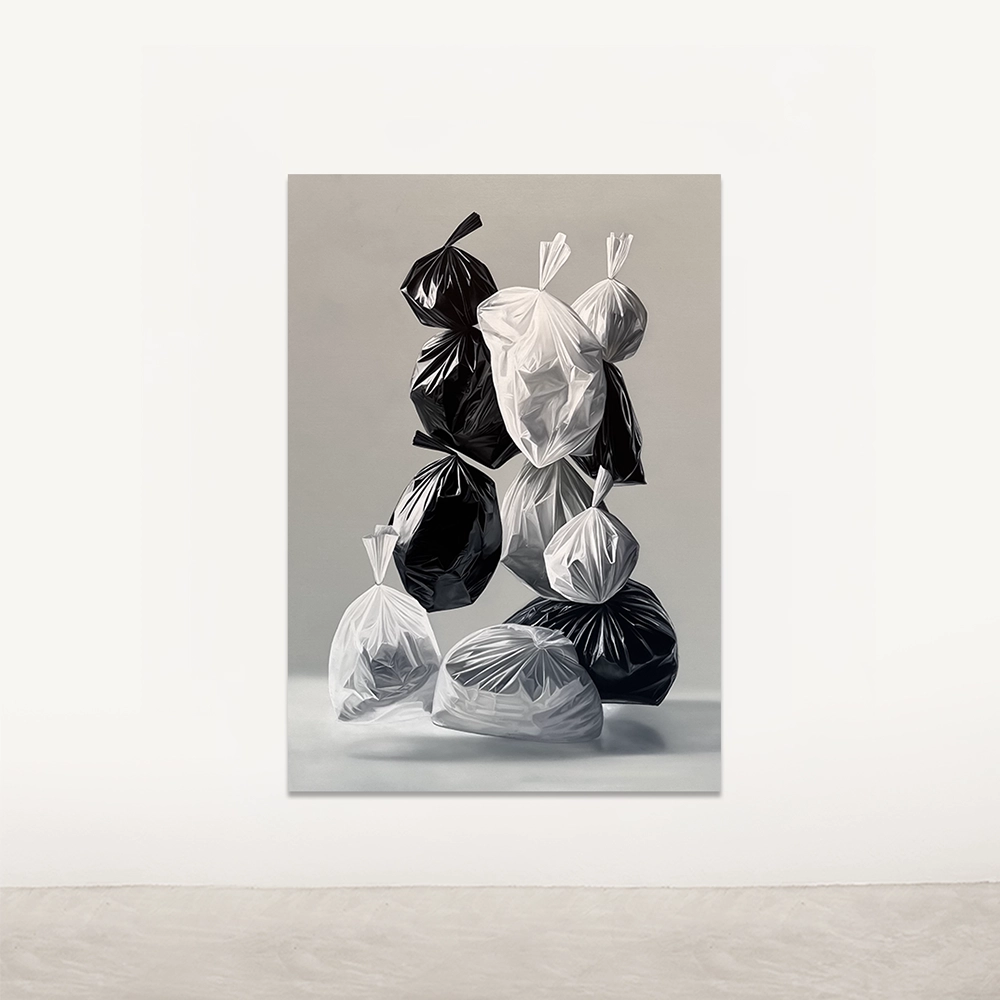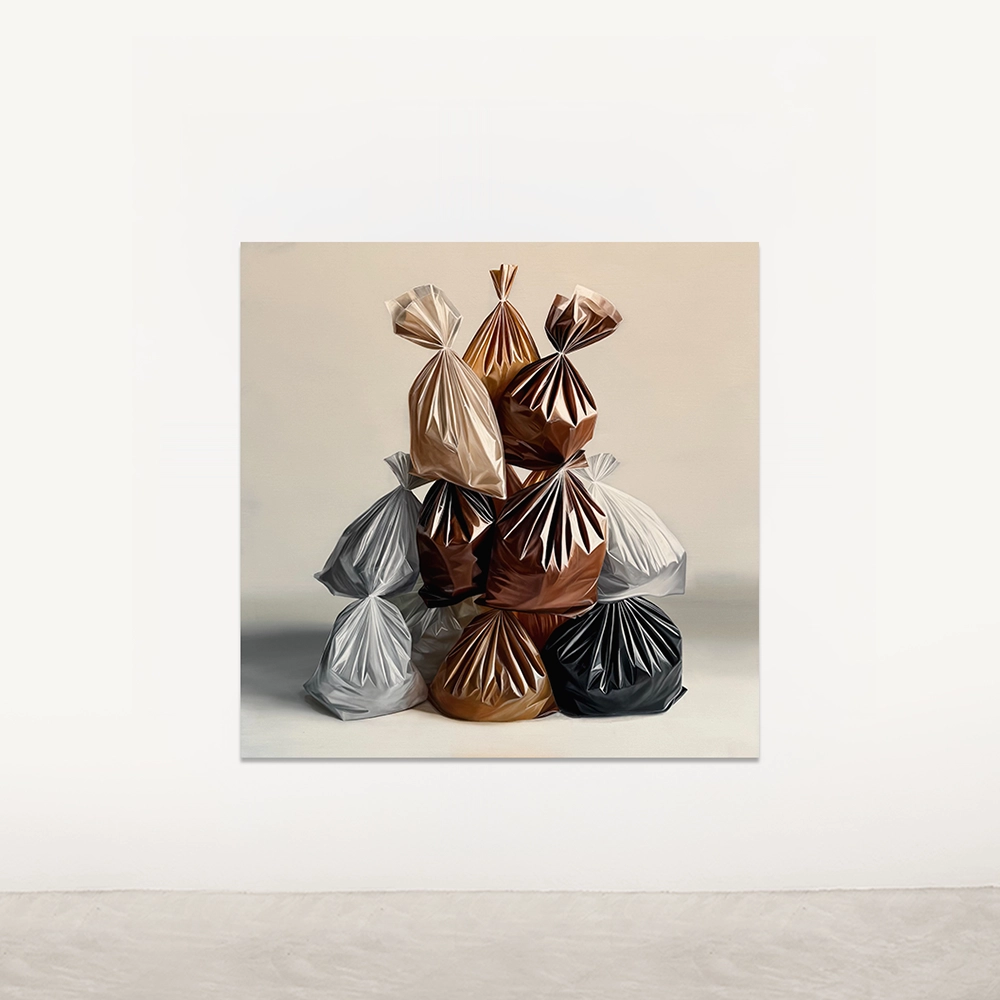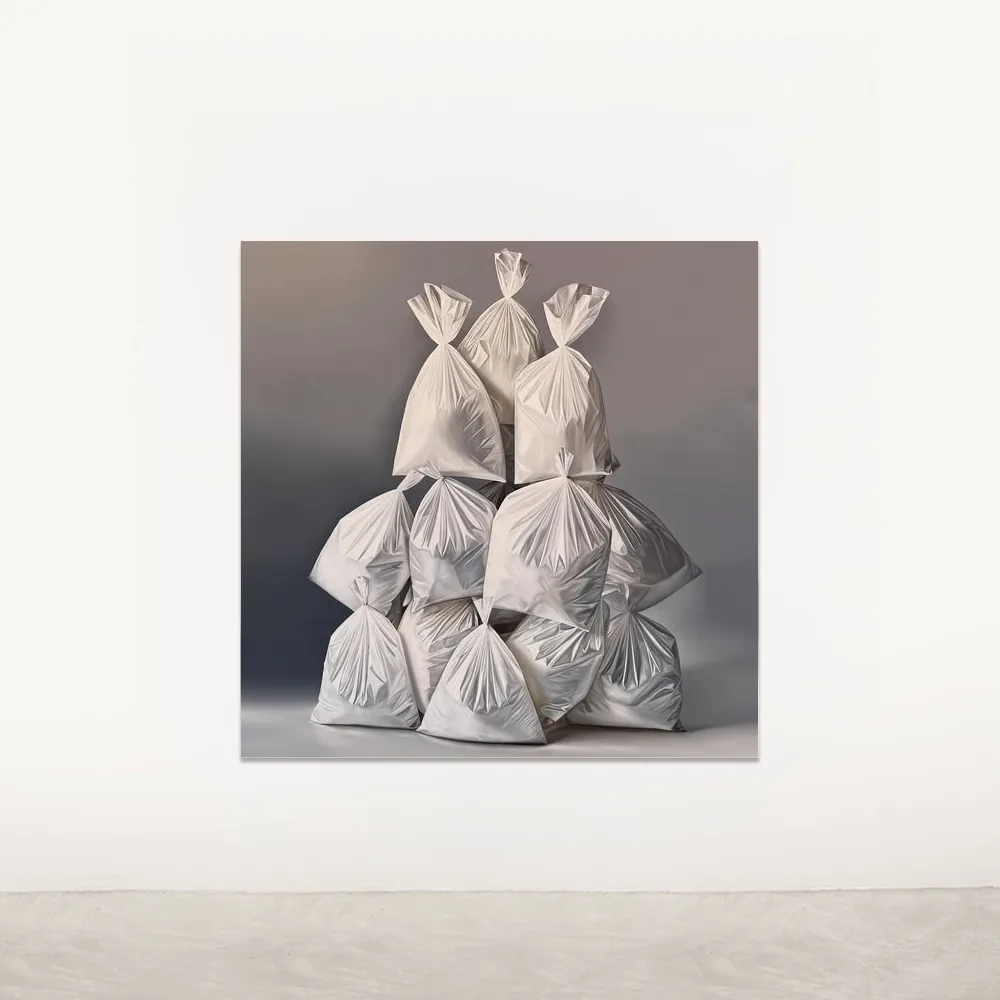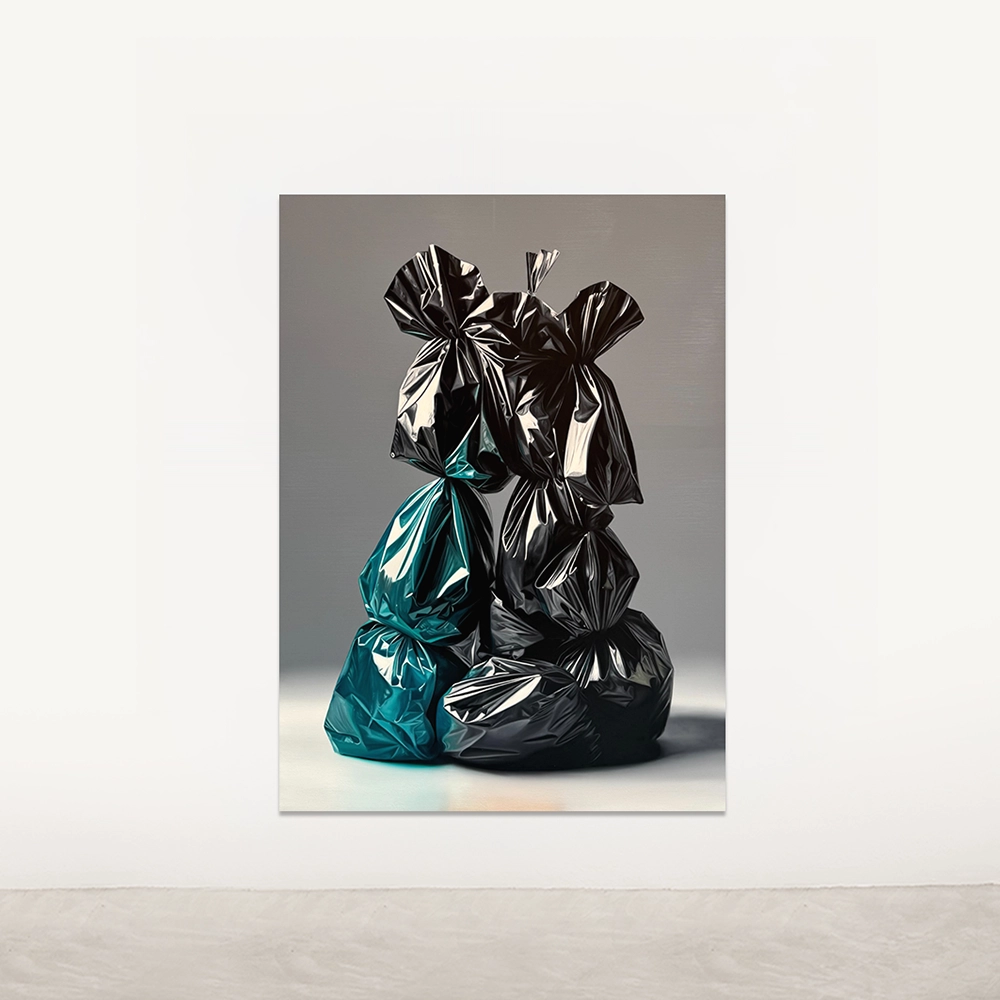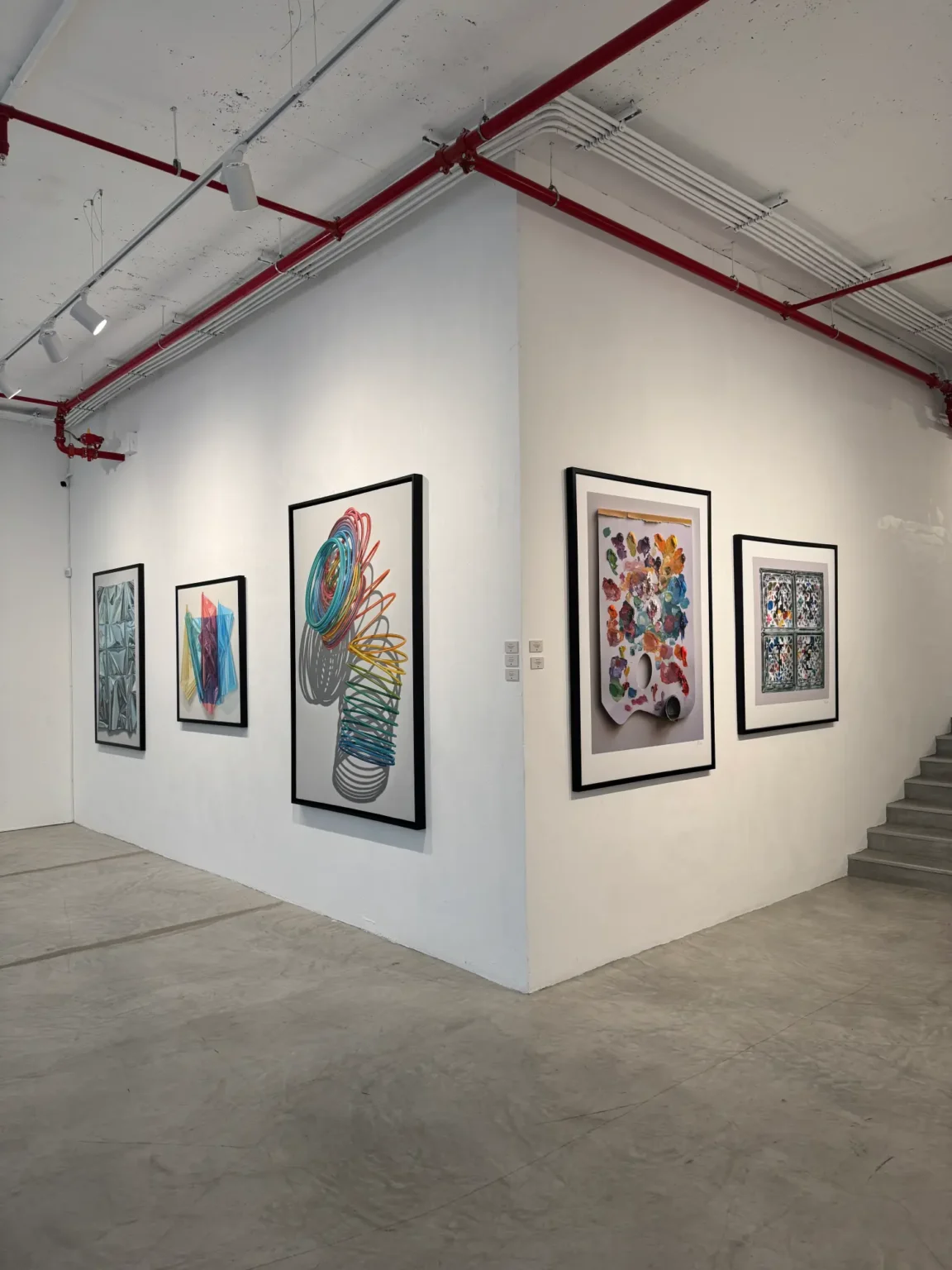


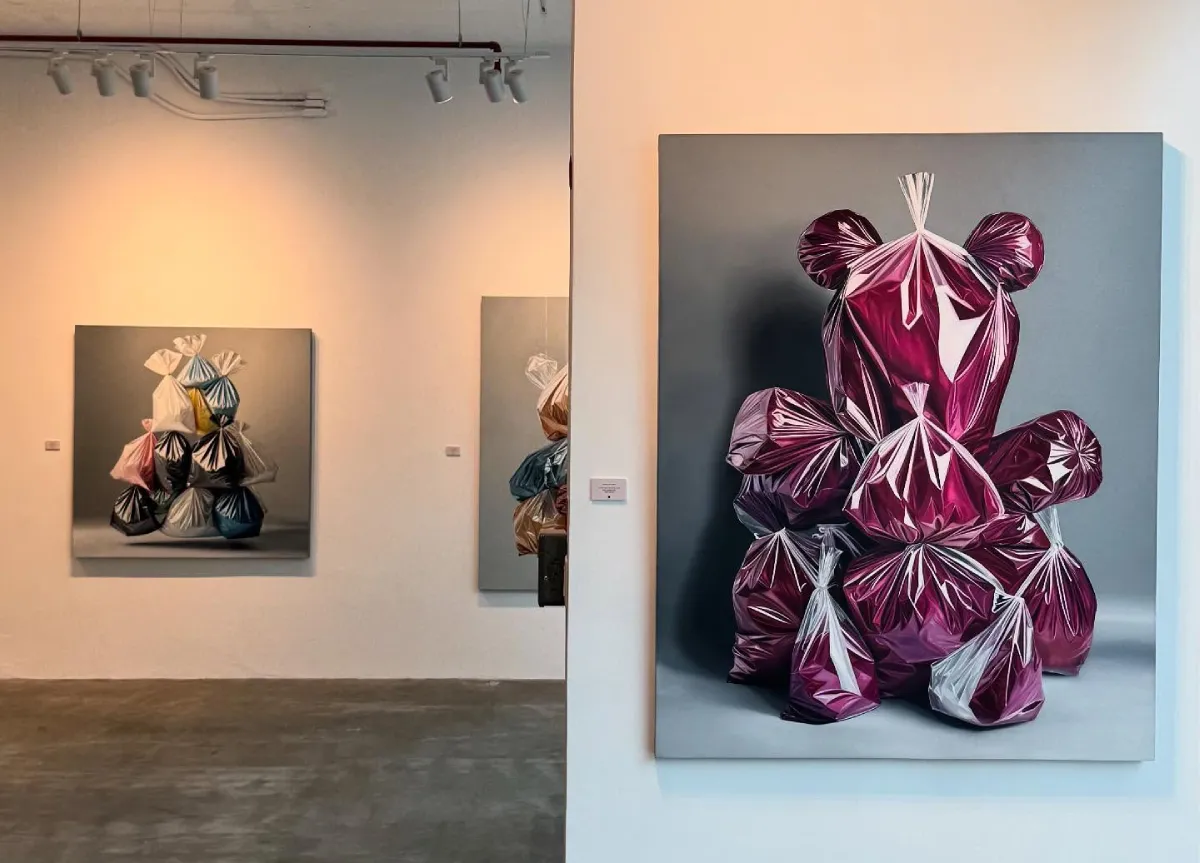
In order to repel flies and other insects, in Colombia and some other tropical locations, plastic bags filled with water are suspended at different heights. That popular belief inspired Carlos Villabon to represent such bags in a mimetic way and in different formats. This image comes from warm places that the artist lived in and visited during his childhood, a concept that contributed to one of the central themes of his work.
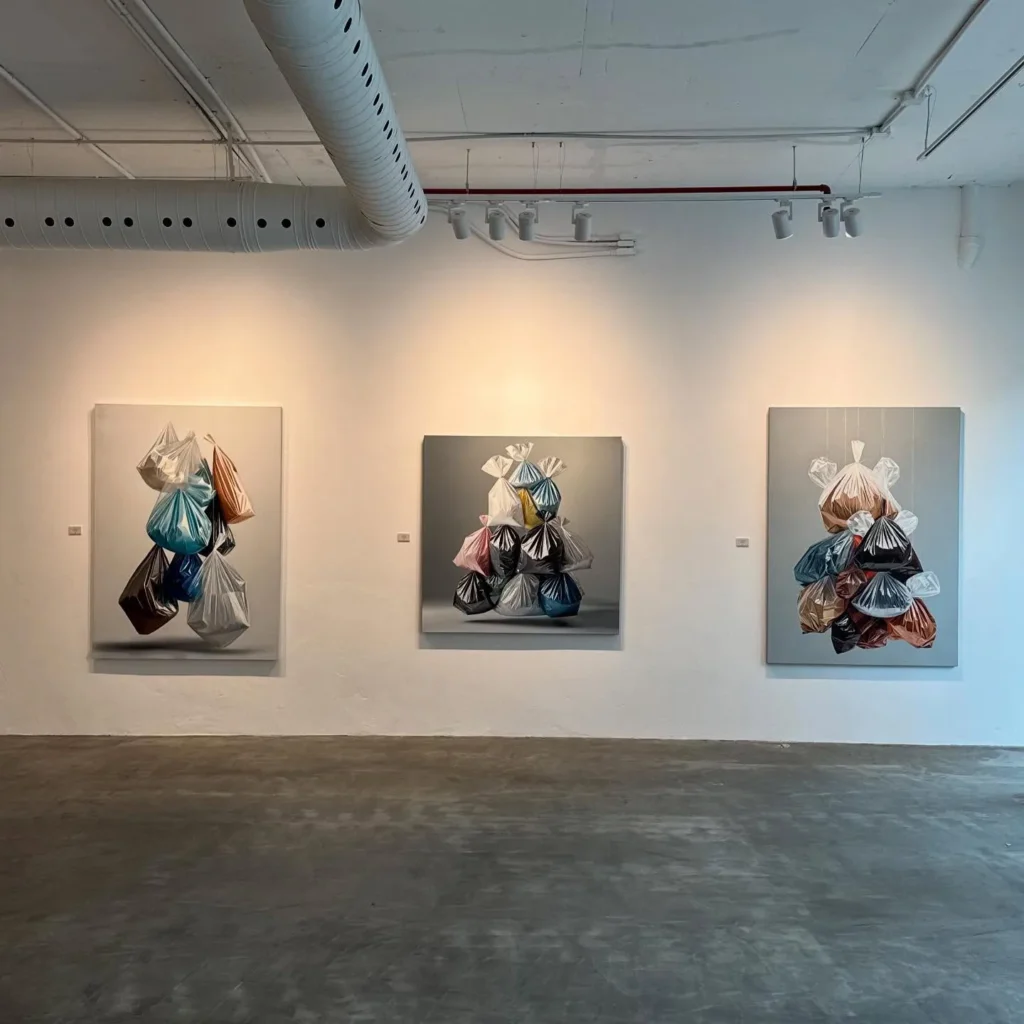
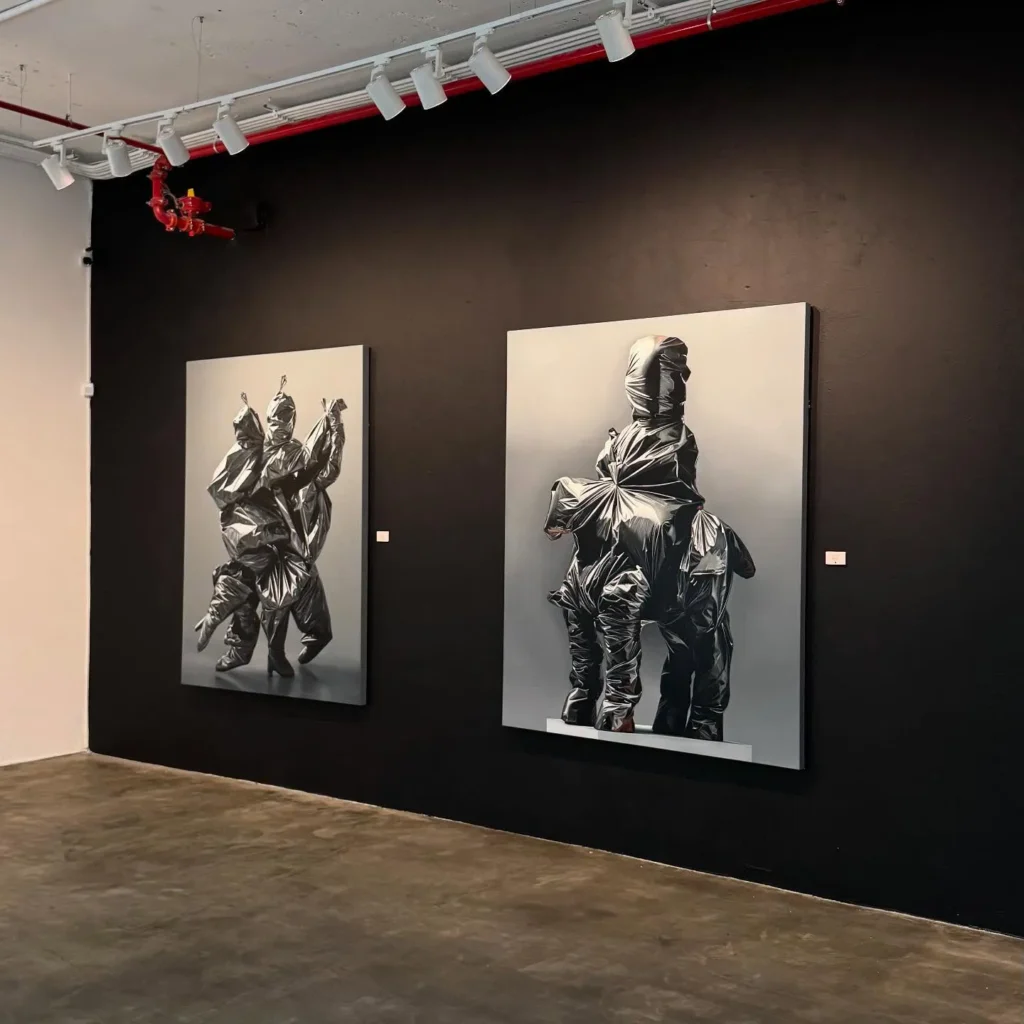
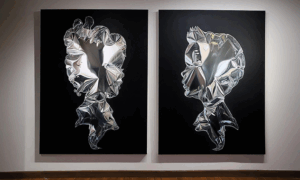
ADN (2022) emerges from several formal explorations that Villabón has been working on: light, darkness, color and the very materiality of the bags. Asimismo, proviene del análisis fotográfico de las películas y de la literatura universal, citadas en diferentes piezas. The artist’s sensitivity to certain popular images is evident in exceptionally detailed paintings featuring miniature Lego figures of characters from Star Wars, Mickey Mouse, and Alice in Wonderland—common references that bring to mind the Pop aspect of the works. However, Villabón’s reflections go beyond the play of these everyday pictorial representations, as they allude to plastic as a silent weapon that affects the environment, and therefore, our lives.
For their part, sculptures accompanied by an audiovisual piece are, in a way, the artist’s interpretation of different objects. At first glance, the sizes of the artworks are striking because they differ from the “real” perception of a bear, a balloon, and even the plastic bag itself. Which leads us to wonder, what is inside these sculptures? The air that fills the interior space of balloons is like a memory: we cannot see it, but it is there.
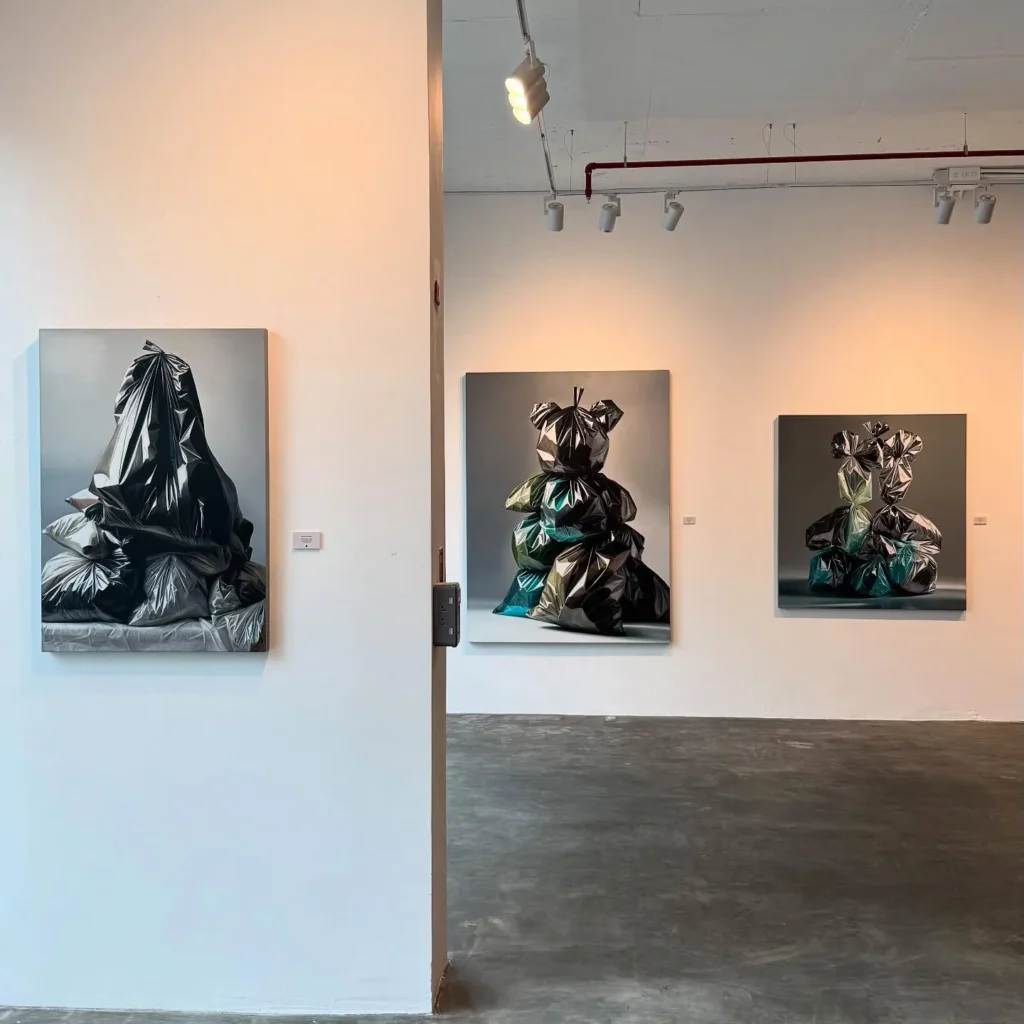
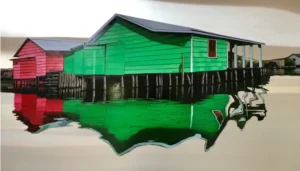
Flavored ice bags, consumed in various parts of the region as sweets or simply to cope with the heat, are another peculiarity of the environment that Villabón has investigated. The Bolis, similar to suspended water bags, showcase the artist’s mastery in handling vibrant colors, glows, and nuances. Reflections also express physical phenomena such as the reflection and refraction of light that strikes objects. Furthermore, when these intertwine, simulating the two strands of DNA, they poetically construct parallels such as: human beings and their contexts, childhood and adulthood, light and darkness, color and shadow, the conscious and the unconscious, among others.
The exhibition invites viewers to reflect on the metaphors and analogies that the artworks evoke when referring to each person’s childhood experiences, without neglecting the importance of understanding based on perception. It was not without reason that Nietzsche stated (…) that insects and birds perceive a world completely different from that of humans, and that the question of which of the two perceptions of the world is correct is completely meaningless. In other words, Villabón does not concern himself with the perception of the fly when it is frightened by the suspended bag, nor with the veracity of this custom, but rather points to an exercise in introspection about our past and imagination.
“Lightweights” proposes a dialogue between the ephemeral and the enduring, the irretrievable and the transcendental.
Through compositions made with suspended plastic bags, this exhibition transforms an everyday, mundane object into an element laden with symbolism, reinterpreted through an everyday act deeply rooted in popular belief.
This practice, steeped in symbolism, becomes the starting point for a dialogue between the domestic, the cultural, and the environmental. Villabón permanece en su exploración poética y crítica de las imágenes que moldean nuestra identidad y memoria colectiva; despliega fragmentos de infancia, cultura, historia del arte e imágenes familiares.
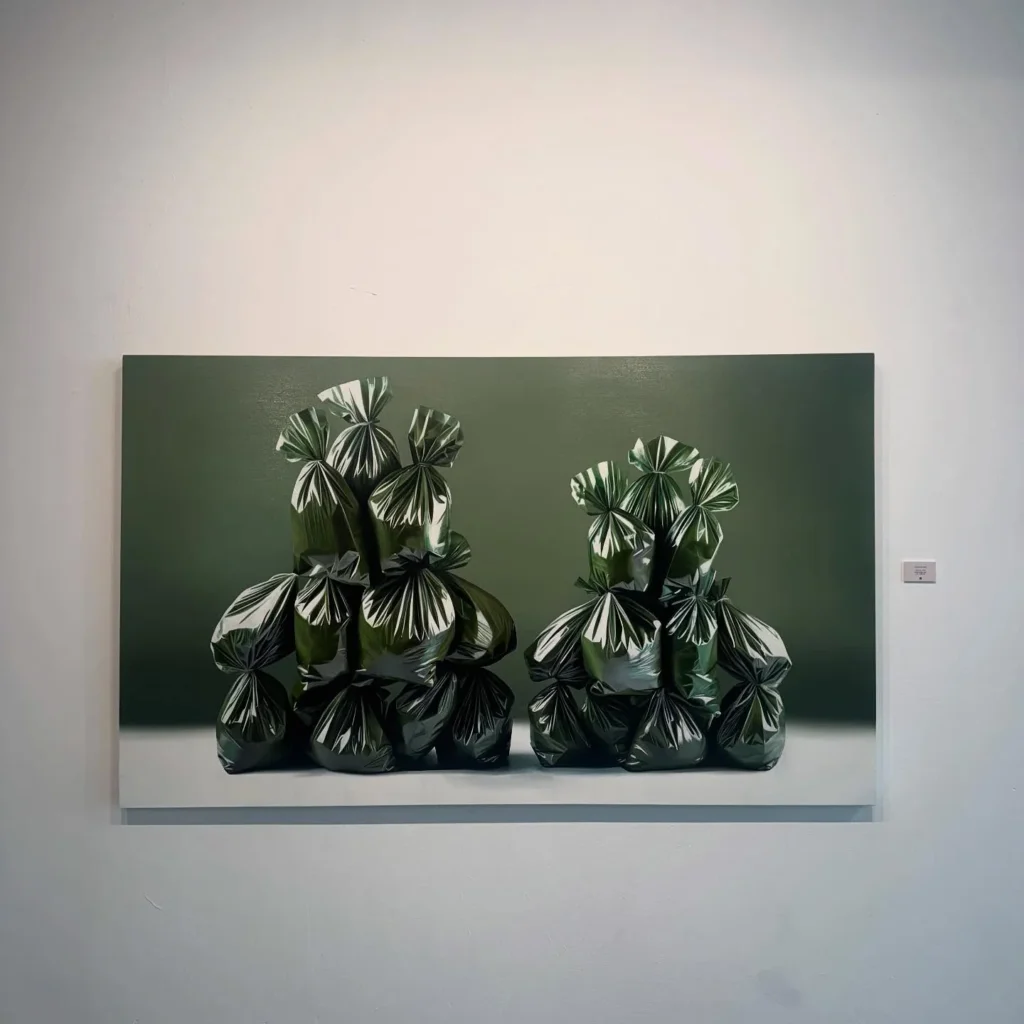
Each suspended and constructed element not only questions our relationship with waste, but also acts as a translucent canvas that reveals hidden images, inviting the viewer to seek connections in the constructions of images, textures, colors, folds, lights, darkness, shadows, and transparencies, while reflecting on the impact of our actions and the value we assign to what we consider disposable.
Villabón continues to play with the paradox of the material: plastic bags are light, but when they are gathered or suspended, they acquire presence, density and meaning; creating a visual reminder of how that which seems light in our hands can leave a heavy mark on time and the environment.