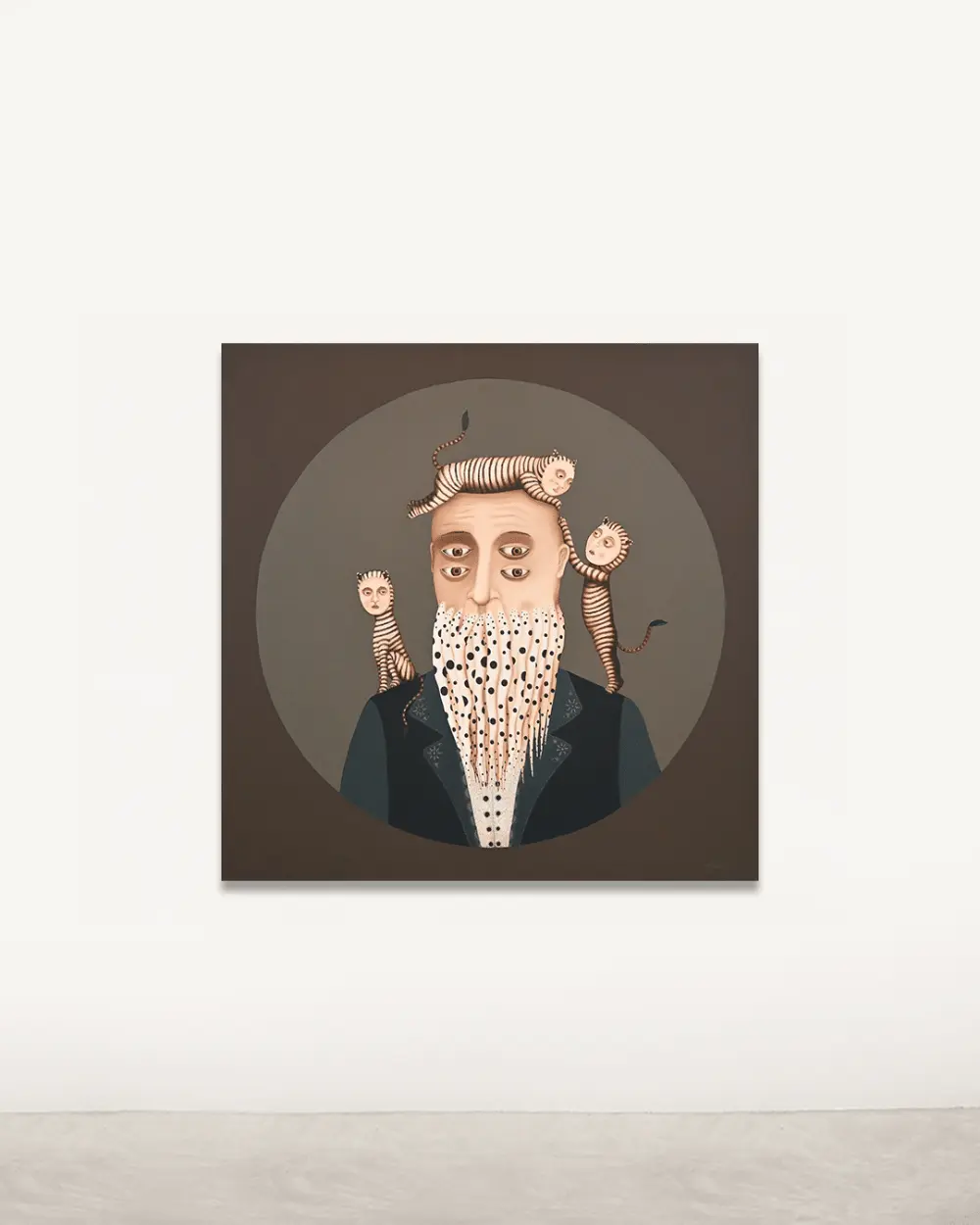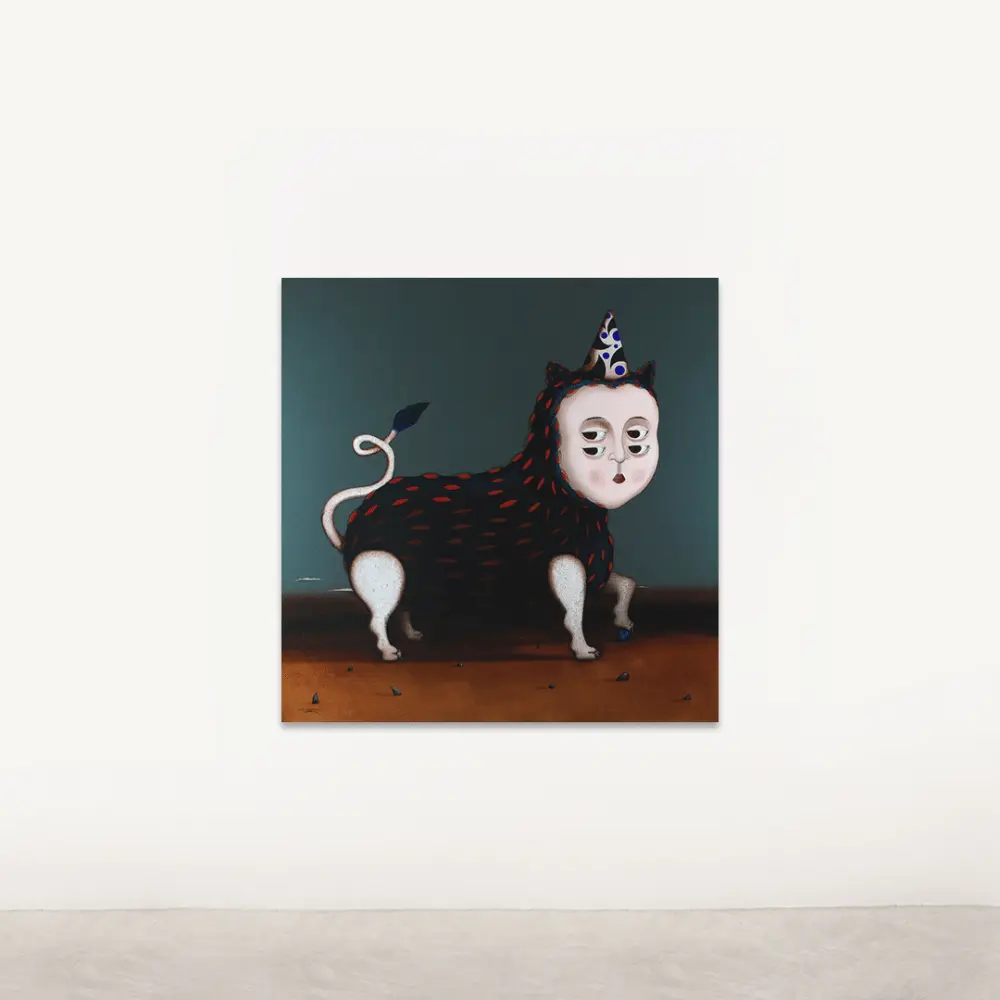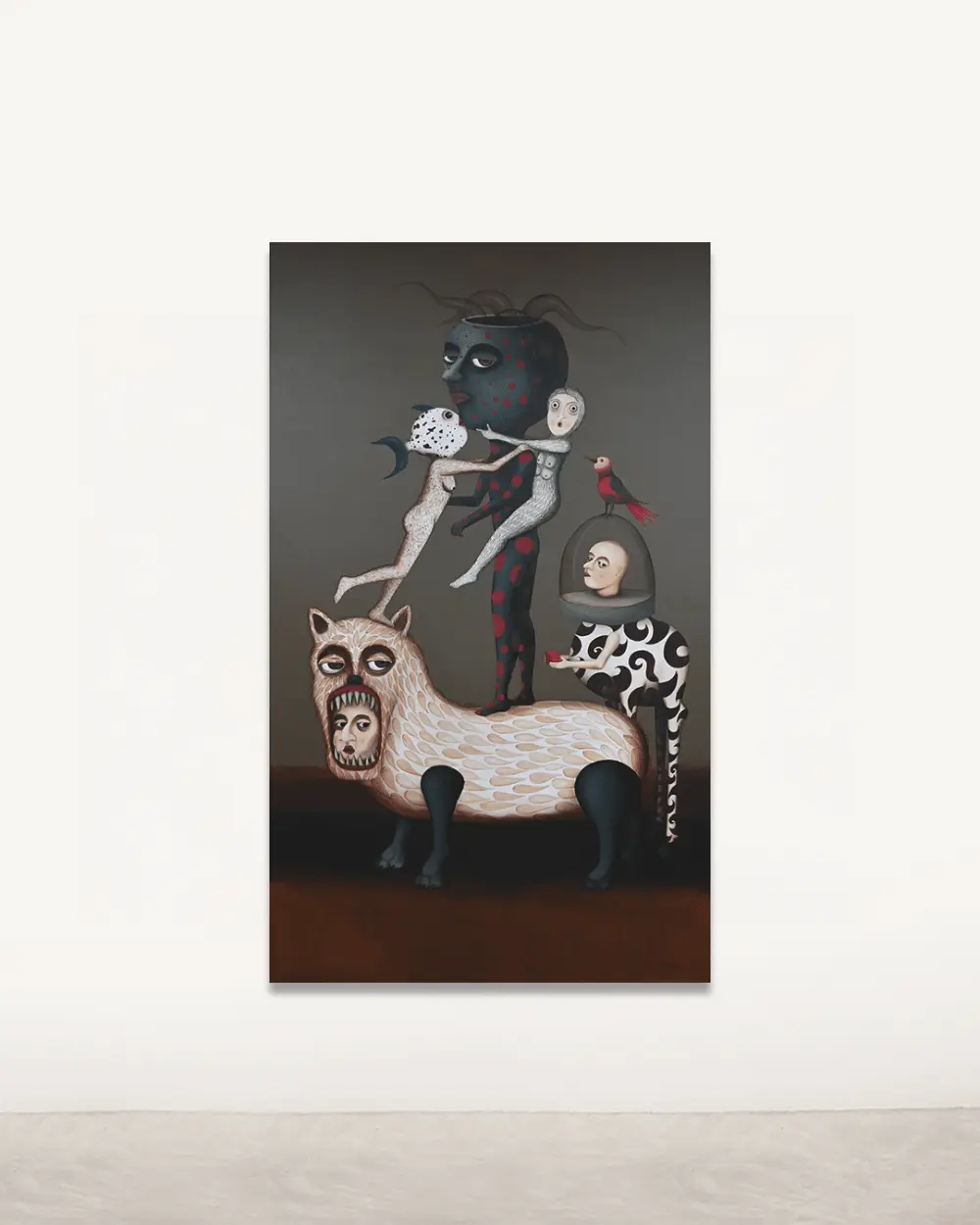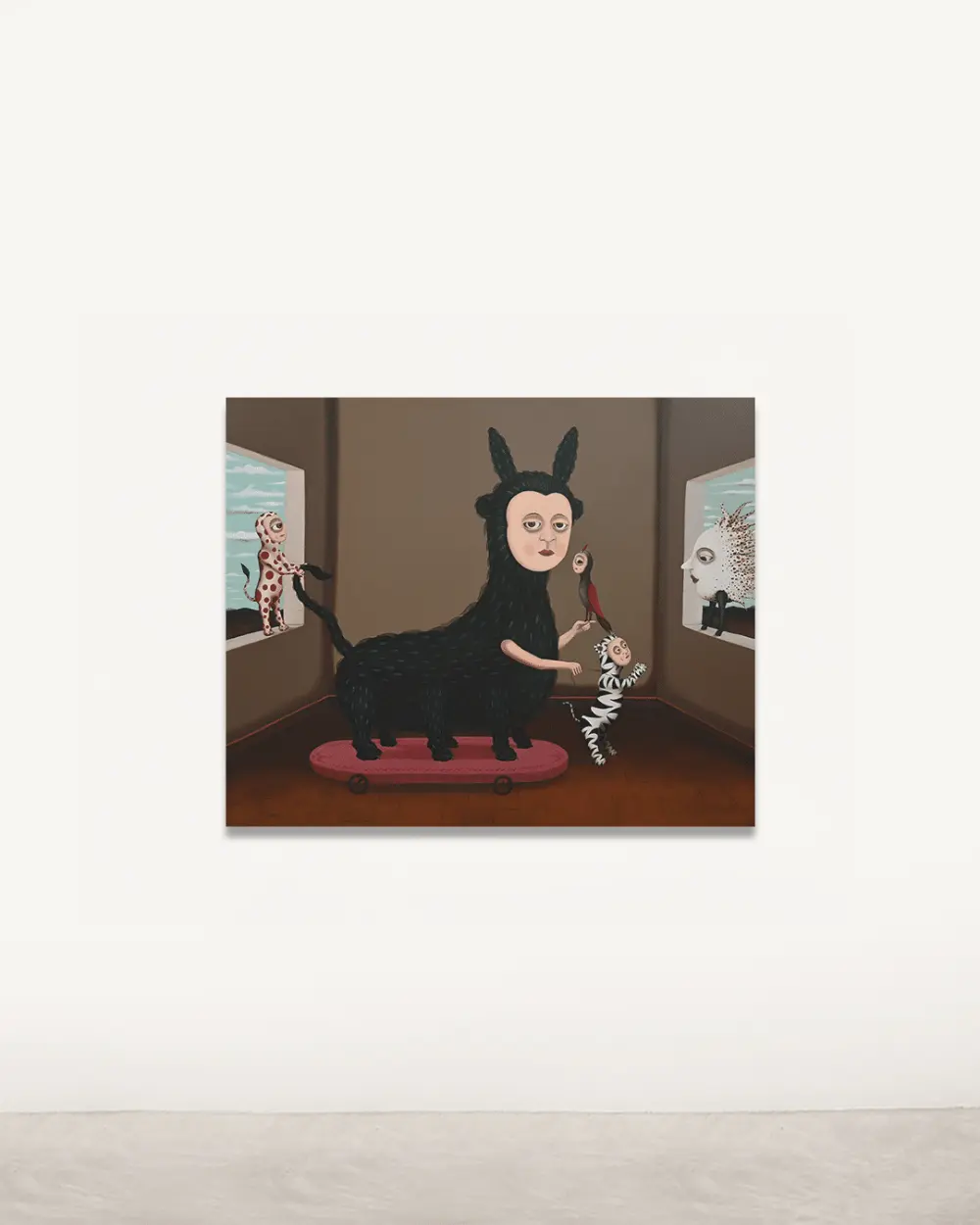


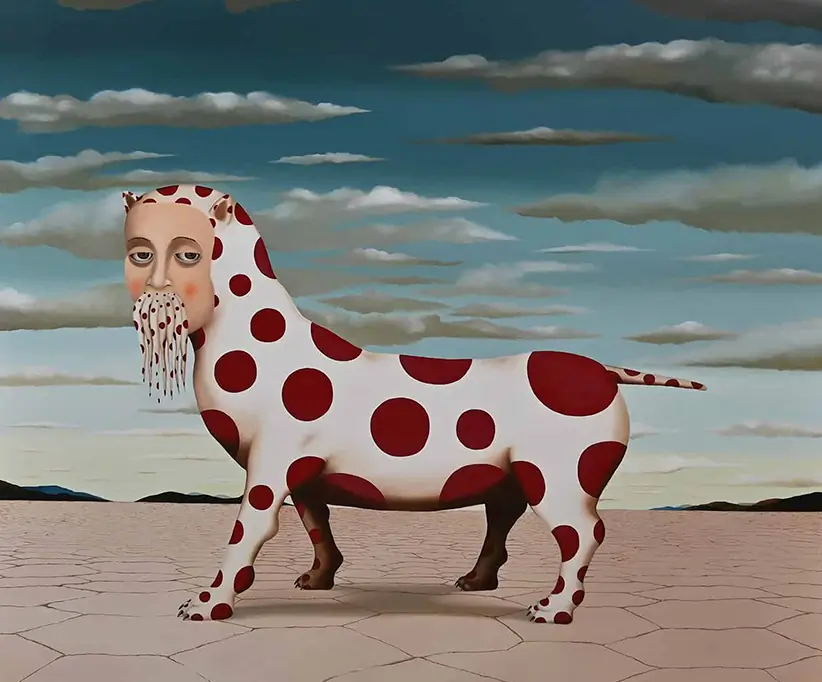
Marcelo developed much of his work inspired by Oruro’s mystical energy and strong folkloric tradition; its carnival was declared by UNESCO as an Oral and Intangible Heritage of Humanity. At the age of 16, Marcelo began exhibiting his work in group shows, despite having no formal artistic training. Driven by his passion for drawing and his uncle’s encouragement, he continued exploring his interest in color through watercolors, pastels, and colored pencils.
Later, he completed an art course at the Catholic University of Santiago, Chile, in 1992. His earliest works were strongly focused on religious themes. This first phase of his career lasted more than five years and was influenced by colonial Baroque artists such as the Master of Calamarca from Bolivia, Melchor Pérez de Holguín, the Italian artist Bitti, among others. He then discovered the power and language of color. This led to a second phase that he calls the “Apocalypse” phase, followed later by the “Magical Altiplano” phase. His influences came mainly from Bruegel, Bosch, Carrington, Dalí, Kahlo, and Remedios Varo, to name a few. Over the last ten years, Marcelo has devoted himself to exploring a more subtle symbolic language.
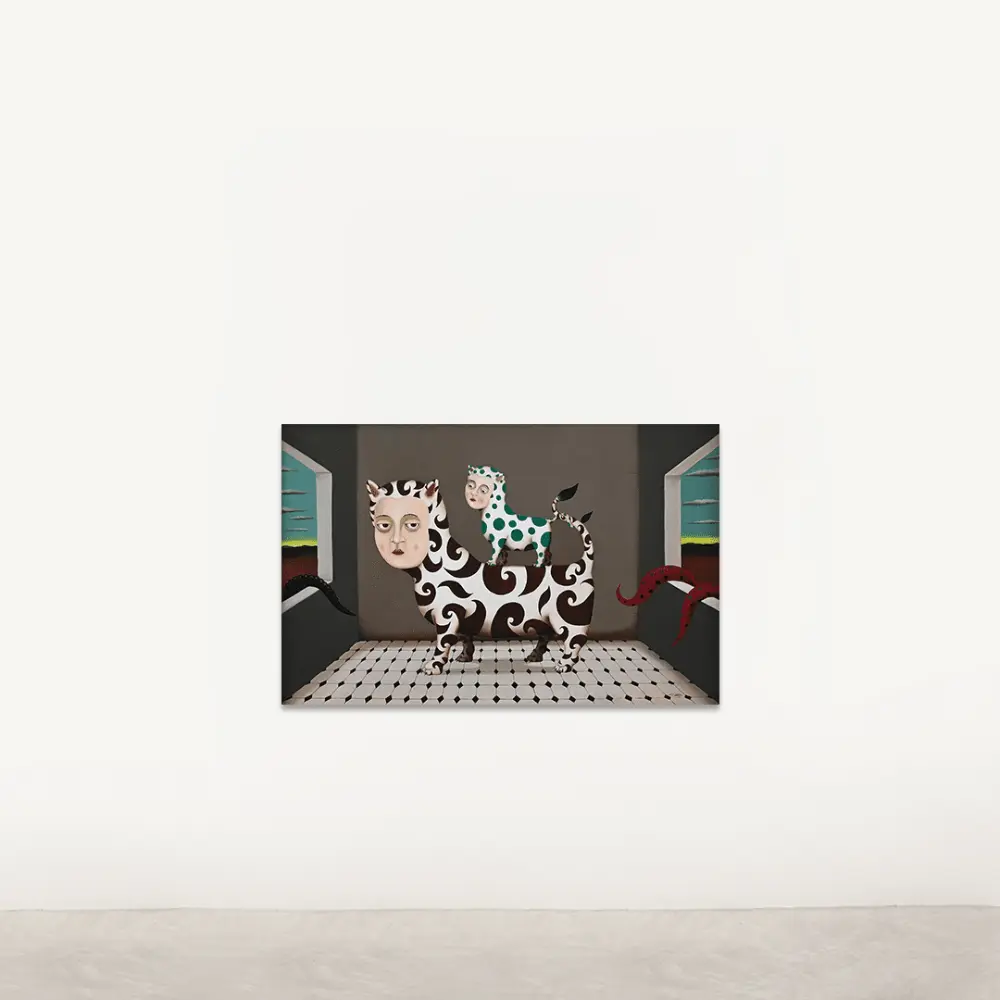
The repetition of the Bolivian altiplano landscape is evident in his work. The landscape of his childhood and the memory of that setting continue to follow him—it is magical, filled with great power and energy. The images in Marcelo’s paintings are whimsical, complex, absurd, and surreal. They appear to him randomly, and he sketches them so as not to lose the ghost.